

How to Spot the Difference Between Melasma vs. Hyperpigmentation
How to Spot the Difference Between Melasma vs. Hyperpigmentation.
According to Dermatologist, this article will explain:
- What is Hyperpigmentation
- Types of Hyperpigmentation
- Hyperpigmentaion vs Melasma
- Treating Sun-Induced Hyperpigmentaion
- Treating Post-Inflammatory Hyperpigmentation
- Prevention and Treatment of Melasma
The Final word
Do you have hyperpigmentation or melasma? Well, you might have both. Melasma and hyperpigmentation are close to the square and rectangle relationship. Melasma is a specific type of hyperpigmentation that commonly presents on the face of women of reproductive age. However, not all forms of hyperpigmentation are possibly melasma. In this article, We’ll help you differentiate melasma from other forms of hyperpigmentation.

What is Hyperpigmentation?
Hyperpigmentation means “excess pigment on skin". To be a little more specific, it means pigmentation appears on skin darker than genuine skin color.
Types of Hyperpigmentation:
1: Primary pigmentary disorders:
In the same way that some are prone to developing skin conditions like eczema and acne, others are susceptible to developing pigmentation of the skin. In primary pigmentary condition, hyperpigmentation occurs without any other symptoms. Melasma is one of the most common primary pigmentary disorders.
2: Post-inflammatory hyperpigmentation:
The type of skin that tans easily is more sensitive. It may resolve with hyperpigmentation quite speedily through any type of inflammation on the skin. This hyperpigmentation is not permanent but may last a few weeks to months depending on the intensity. Eczema and acne are two of the most common causes of post-inflammatory hyperpigmentation.
3: Sun-induced hyperpigmentation: The sun's ability to cause aging signs and wrinkles over time is commonly known, but there is less awareness about the UV-Light impact causing redness and pigmentation of the skin. Additionally, my experience says that this typically results in sunspots, dark patches, and faint hyperpigmentation.

What Is Melasma?
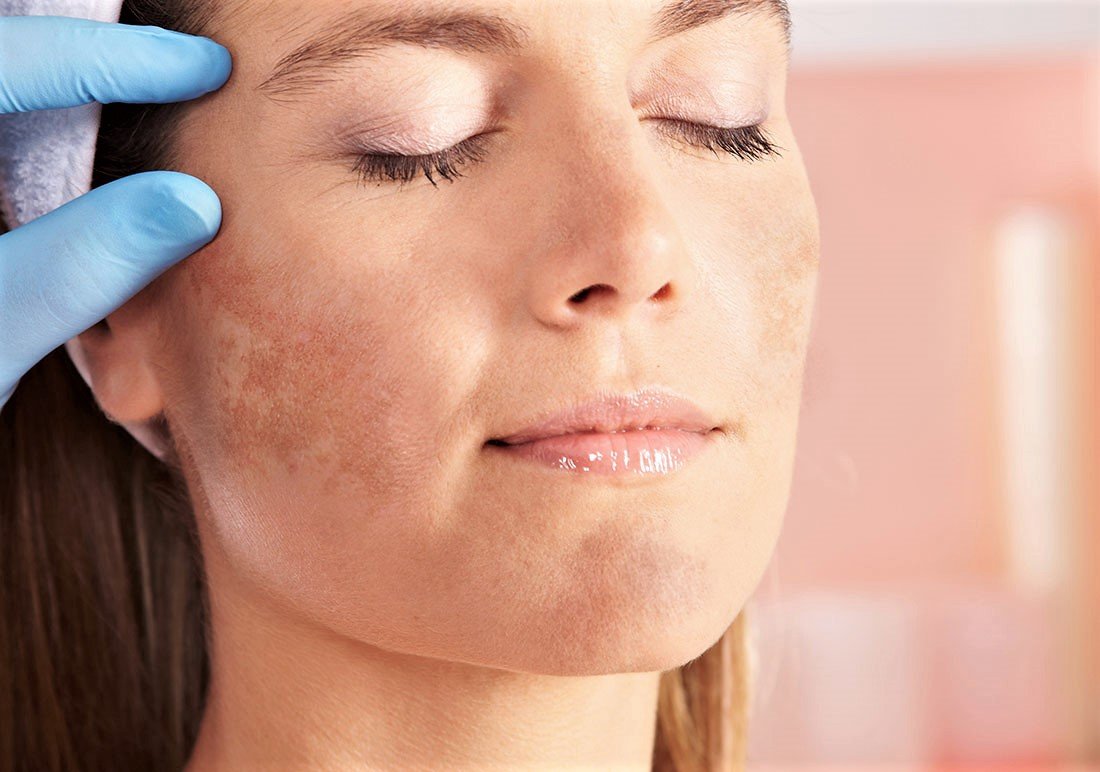
Melasma is a primary pigmentary disorder, which also means melasma presents with gradual pigmentation of the skin without another cause. Melasma typically seems like symmetric tan to brown flat patches on the upper lip area, cheeks, and/or forehead. Melasma does not itch or burn and it does not have any overlying scaling, comedo, or pimples.
Higher estrogen levels are a potential trigger for melasma, so it commonly appears in females during pregnancy and/or birth control. However, it can occur in women without this stimulant and along with men. Melasma is more common in African-American, Asian, and Hispanic skin tones but occurs in all skin tones.
Sunlight is a great trigger for melasma, so melasma tends to flare in the summers, and during sunny vacations and naturally improves in the winter. Additionally, pollution and visible light can worsen melasma.
Melasma vs Hyperpigmentation:
Melasma condition can be differentiated from post-inflammatory hyperpigmentation by the lack of a preceding rash and the symmetric nature of melasma. Itching of the skin suggests post-inflammatory hyperpigmentation from an eczema-like rash. The existence of pimples or pustules-type conditions suggests post-inflammatory hyperpigmentation from acne.
Melasma and sun-induced hyperpigmentation both exist without symptoms, but the symmetric and repeated nature of melasma helps to differentiate the two. Melasma is typically worse each summer and improves each winter. Whereas, sun-induced hyperpigmentation slowly progresses each year with additional sun exposure.
Of course, it’s possible to have melasma and sun-induced hyperpigmentation or melasma and post-inflammatory hyperpigmentation. It's also quite possible to have all three of these. However, sun-induced hyperpigmentation tends to occur more in lighter skin tones, and post-inflammatory hyperpigmentation tends to seem more in darker skin tones.
3 Ways to Treat Sun-Induced Hyperpigmentation:
The simplest prevention for one of the three types of hyperpigmentation is sun-induced hyperpigmentation. Diligent sun protection will surely prevent sun-induced damage that leads to hyperpigmentation.
1. Topicals
Daily use of retinoids and topical antioxidants (vitamin C, vitamin E) can give visible results to reverse some sun-induced pigmentation and help prevent future pigmentation.
2. Chemical peels
A series of home or in-office chemical peels containing salicylic acid, glycolic acid, trichloracetic acid, lactic acid, retinol, and/or hydroquinone can improve sun-induced hyperpigmentation.
3. Lasers
Intense pulse light (IPL) skin treatment is a brilliantly effective skin therapy for generalized redness, dark patches, and pigmentation that occurs with sun-induced hyperpigmentation. Sunspots and melasma can be treated with a 755-nm or 1064-nm laser.
3 ways to Treat Post-inflammatory Hyperpigmentation:
Prevention:
In general, post-inflammatory pigmentation lasts longer than the above skin condition. Therefore, the most effective treatment for post-inflammatory hyperpigmentation may be the early and aggressive treatment of the underlying cause. This might include oral, topical, or injectable medications to prevent the development of the sun-induced skin disorder as well.
1: Topicals
"For acne patients, a daily routine that includes retinol, vitamin-c, and, azelaic acid is helpful to minimize post-inflammatory hyperpigmentation" according to Derm. These topicals may reduce the severity of post-inflammatory hyperpigmentation and the number of days to resolution. Eczema patients are indicated to be very careful using topicals to target pigmentation, as they may be too irritating for such a sensitive skin disorder.
- Chemical peels
"For acne patients, a daily routine that includes retinol, vitamin-c, and, azelaic acid is helpful to minimize post-inflammatory hyperpigmentation" according to Derm. These topicals may reduce the severity of post-inflammatory hyperpigmentation and the number of days to resolution. Eczema patients are indicated to be very careful using topicals to target pigmentation, as they may be too irritating for such a sensitive skin disorder.
- Lasers
Laser technologies such as picosecond lasers and microsecond can improve post-inflammatory hyperpigmentation. These should be undergone with an expert as the wrong or high-intensity laser may create burns, scarring, and/or additional post-inflammatory hyperpigmentation.
Prevention and Treatment of Melasma:
1. Sun and visible light protection
Melasma is extremely sun-sensitive, so broad-spectrum SPF30+ is essential to be used every single day of the year. For that reason, tinted physical sunscreen are recommended.
2. Non-estrogen-based birth controls, if desired:
Since estrogen levels are a potential trigger for melasma, birth control without estrogen can lead to some improvement, although it may not lead to the resolution of melasma.
Multiple birth controls have different efficacies, beneficial effects, and side effects. That is why the decision about your specific skin concerns and reproductive goals should be made with advice from your gynecologist and your dermatologist.
3-Topicals
Daily use of pigment regulating topicals such as kojic acid, glycolic acid, retinol, vitamin C, azelaic acid, niacinamide, and/or tranexamic acid can help minimize melasma. Prescription-strength hydroquinone is also a good choice to improve a flare but should only be used under the guidance of a board-certified dermatologist. Overuse possibly lead to worsening hyperpigmentation condition.
4: Oral therapy
In a severe condition of melasma, oral tranexamic acid can be quite effective but also keep in mind potential side effects and contraindications. The benefits and risks should be discussed with a certified dermatologist.
5: Chemical peels
Chemical peels containing salicylic acid, retinol, glycolic acid, lactic acid, trichloroacetic acid, and/or hydroquinone can improve melasma if used in a well-followed routine. These must be done under expert guidance. Do not forget that intense chemical peels may worsen melasma.
6: Laser
The best option among all is Intense pulse light (IPL). It is a delicate treatment procedure for already suffering skin and gives spotless, desired skin. Only an IPL specialist is approved for this therapy to prevent any harm or side effects.
The Final Word:
Let's say, Melasma is a square, and hyperpigmentation is a rectangle. All melasma is a form of hyperpigmentation, but on the other hand, not all hyperpigmentation is melasma. Three main types of hyperpigmentation are primary pigmentary disorders, sun-induced hyperpigmentation, and post-inflammatory hyperpigmentation. Each one has individual causes and treatments, but a committed attitude towards sun protection, pigment regulating topicals, and careful use of peels and lasers will undoubtedly bring improvement to all three.
Learn more: How To Choose And Apply The Right Sunscreen.